
Every year, a parent catches me at the gate and asks, gently, a version of the same question. Their daughter is finding the work harder this year. Is it meant to be this hard? Is the school asking too much of her?
I have been at Wilderness for 15 years, and it is still the question I most want to answer well. Some of it, I tell them, is meant to be hard. And no, that is not the same as asking too much. The difference between those two things is the whole of what we believe about how a girl learns.
According to the World Health Organization, wellbeing, or wellness, is defined as the state “in which every individual realizes his or her own potential, can cope with the normal stresses of life, can work productively and fruitfully, and is able to make a contribution to her or his community (WHO, 2014).” Picture a see-saw. On one end are the challenges your daughter is carrying; the essay, the exam, the piece she cannot quite play yet, and the harder things too: the friendship that has gone quiet, the confidence that comes and goes. On the other end sit her resources; what she knows, the skills available to her, how she is feeling, who is beside her, how she is travelling in herself. Psychologists who study wellbeing describe exactly this balance, and they picture it as a see-saw (Dodge et al., 2012). When her resources meet her challenges, a girl is steady. Load either end too heavily and she tips into feeling overwhelmed, or, just as unhappily, into boredom, where nothing is asked of her and so nothing grows.
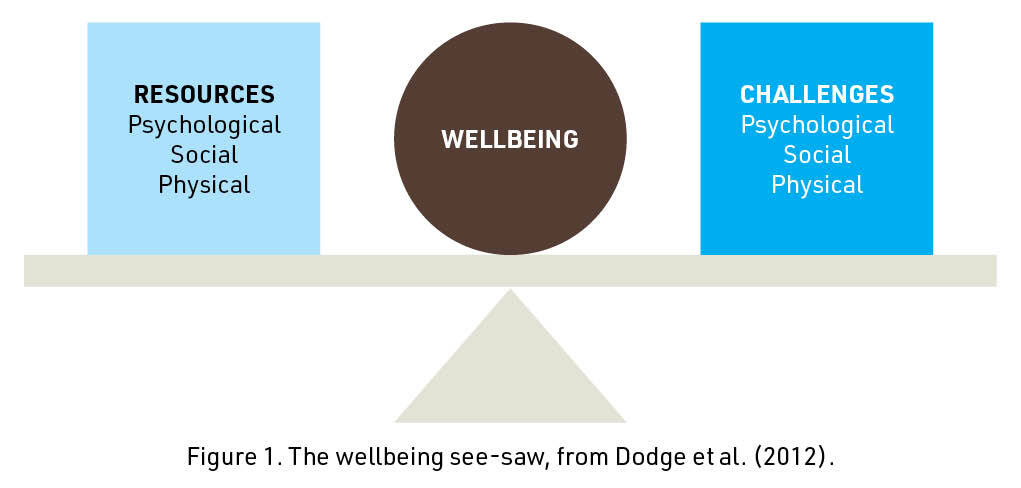
Here is what 15 years at Wilderness has taught me. A girl does not learn most on the days when everything comes easily. She learns on the days when something sits just past what she can already do. Near enough to reach, far enough that reaching changes her. That “just past” is where our teachers try to live, lesson after lesson. It is a fine and deliberate art, and it is the very opposite of carelessly piling on more work.
And this is the part I most want that parent at the gate to hear. When a girl meets something she cannot yet do, there are only two ways to steady the see-saw. We can make the task smaller, or we can make the girl stronger. We almost always choose the second.
Let me make that real, because it is easy to say and harder to picture. I think of a girl who is entirely able to write the harder essay but is quite sure she cannot. The ability is there; the belief is not, not today. The easy kindness would be to let her write the simpler one and spare her the discomfort. The truer kindness is to leave the hard essay exactly where it is, sit down beside her, and give her what she is missing: a model to learn from, a first paragraph we begin together, the plain reminder that she has done harder things than this. The challenge does not move. She does. And when she is finished, when the thing she was sure she couldn’t do is there on the page in her own hand, she has gained something no easier task could have given her. Not a mark. A little more of herself.
That is what we mean when we speak of rigour, and it is why the word does not frighten us the way it can frighten a parent. Rigour is not hardness for its own sake. It is keeping the bar where a girl can reach it only by stretching, but with support alongside her. Held that way, challenge is not the enemy of a happy childhood. It is where the best kind of happiness is made: the quiet, durable confidence of a girl who has surprised herself.
This matters more than it might seem. The habit of treating every task as a verdict on her worth, is one of the real threats to a young person’s wellbeing. The answer to it is not to lower the stakes, but to help her meet difficulty, and her own mistakes, with kindness. A prevention program developed here in South Australian schools by Dr Tom Nehmy found precisely this: easing the grip of unhelpful perfectionism reduced anxiety and low mood in the students who took part (Nehmy & Wade, 2015). This is true well beyond the essay and the exam. The same faith runs through the smaller things we ask. This term I have deliberately asked for more of them, not fewer: the uniform worn with pride, the grounds treated as something we belong to rather than something we pass through, the courtesy that greets a visitor or a teacher without being prompted. None of these is really about appearances. Each is a small, deliberate challenge, a bar held a little higher, and each teaches a girl the same quiet lesson the hard essay teaches: that she is capable of rising to what is asked of her. I have asked more of our teachers, too, not less. I am our teacher to expect more, and to stand ready with more support the moment they do.
Let me be honest about the failure that worries me, because it is not the one parents tend to name. It is not that we will ask too much of your daughter. It is that, wanting so much to be kind, we will slowly ask less. Lowering the bar feels like compassion in the moment; and each time it is lowered, a little less is expected, and a little less is what arrives, first for one girl and in time it spreads as mediocrity. A school that keeps softening the challenge is a school that, with the warmest heart in the world, has quietly stopped striving for excellence.
So we will do the harder, kinder thing. We will hold the challenge steady, and we will stand beside your daughter while she rises to meet it. She will rise higher than she believes she can. That is what adventurous learning, met with genuine academic rigour, looks like from the inside. It is not pressure. It is faith: faith that your daughter is capable of more than she yet knows, offered as a refusal to lower what we ask of her, and a promise to give her all she needs to meet it.
If you see me at the gate, stop me and tell me how she is going. I will always make the time.
It is, in the end, simply another way of being Always True.
References
Dodge, R., Daly, A. P., Huyton, J. L., & Sanders, L. (2012). The challenge of defining wellbeing. International Journal of Wellbeing, 2(3), 222–235.
Nehmy, T. J., & Wade, T. D. (2015). Reducing the onset of negative affect in adolescents: Evaluation of a perfectionism program in a universal prevention setting. Behaviour Research and Therapy, 67, 55–63. https://doi.org/10.1016/j.brat.2015.02.007
WHO, 2014. “Mental health: a state of well-being,” ONLINE. Available: http://origin.who.int/features/factfiles/mental_health/en/.

